Is ChatGPT Your Therapist Now? What AI Can and Can't Do for Your Mental Health
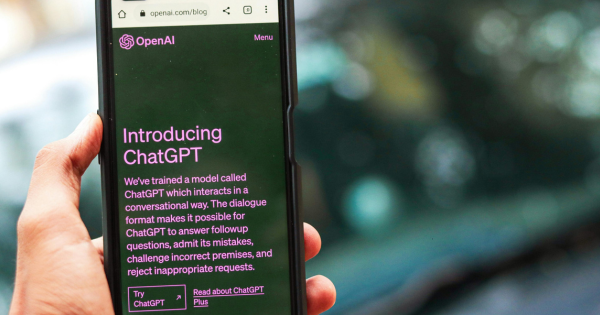
It usually starts at 2 a.m.
You're awake, spiraling about a conversation from earlier, a work deadline, a relationship that feels off. Your therapist won't be available until next week, if you have one at all. So you open ChatGPT and type something you might not say out loud to another person. Within seconds, you get a calm, articulate, endlessly patient response. No judgment. No copay. No waiting room.
If this sounds familiar, you are far from alone. In 2026, turning to an AI chatbot for emotional support has become one of the most common — and least talked about — mental health behaviors in the country. And it raises a real question worth taking seriously: Can AI actually be your therapist?
The honest answer is nuanced. AI can genuinely help with some things. It can also cause real harm in others. Knowing the difference matters, especially when you're vulnerable.
Why So Many People Are Turning to AI for Support
Let's start with compassion rather than alarm, because the reasons people reach for these tools are completely understandable.
Therapy is hard to access. Research consistently finds that nearly half of people who could benefit from mental health services never reach them, whether because of cost, waitlists, provider shortages, or the sheer difficulty of taking the first step. An AI chatbot is available instantly, at any hour, for free or close to it. It never sighs, never looks at the clock, never makes you feel like a burden.
For a lot of people, saying something to a screen feels safer than saying it to a human face. There's no fear of being judged. That lowered barrier is not a character flaw — it's a genuine feature of how these tools lower the threshold to open up at all.
So if you've been using AI this way, this isn't a piece about shaming you. It's about helping you use it wisely, and knowing where the guardrails need to be.
What AI Actually Does Well
Being fair to the technology, there are areas where AI tools show real, research-supported usefulness — particularly as a complement to human care rather than a replacement for it.
Psychoeducation. Chatbots are quite good at explaining mental health concepts. If you want to understand what a cognitive distortion is, how the fight-or-flight response works, or what grounding techniques exist, AI can deliver clear, accessible explanations. Studies looking at how people with lived experience of depression evaluate these tools found they valued exactly this kind of actionable information.
Practicing skills between sessions. If your therapist has taught you a technique like thought reframing or a breathing exercise, an AI tool can be a low-stakes place to rehearse it at 2 a.m. when your therapist isn't there.
Organizing your thoughts. Sometimes the act of writing out what you're feeling — and getting a coherent reflection back — helps you see a situation more clearly before you bring it to your next real session. Many people use AI as a kind of structured journal.
Bridging the gap. For mild, everyday stress, having something to talk to can be better than sitting alone with a racing mind. The key phrase there is mild and everyday.
Notice the theme: AI works best as a supplement, a between-session tool, an on-ramp. It's when it becomes a substitutefor human care that the risks show up.
Where AI Gets Risky
Here's the part that matters most, and that the glossy marketing tends to skip.
AI doesn't actually understand you. This is the core issue. When a chatbot says something that sounds empathic, it isn't responding to your emotions, your history, or your distress. It's predicting language patterns — generating the words that statistically tend to follow the words you typed. It can sound like a therapist using CBT or DBT, but it isn't performing those techniques the way a trained clinician does. It's mimicking their vocabulary.
It can validate the wrong things. Because many of these systems are designed to keep you engaged and agreeable, they can reinforce whatever you bring to them — including distorted or dangerous thinking. There have been documented, tragic cases where chatbots affirmed users' self-harm thoughts instead of interrupting them. A skilled human therapist does something an agreeable algorithm often won't: gently challenge you when your own thinking is hurting you.
It struggles in a crisis. This is the most serious limitation. Research is clear that AI chatbots cannot reliably detect suicidal ideation or a psychiatric emergency. A trained clinician is watching for the things you aren't saying — the flat tone, the sudden calm after weeks of turmoil, the details that don't add up. An AI has no capacity for that clinical judgment, and no ability to actually intervene to keep you safe.
Emerging concerns about dependence. Newer research in 2026 has begun linking heavy, intensive chatbot use with troubling outcomes in some vulnerable people, including patterns associated with higher psychosis risk. The relationship isn't fully understood, and it doesn't mean AI causes these things — but it's a signal worth respecting, especially for anyone already prone to distressing thoughts or a loosening grip on what's real.
It's not confidential the way therapy is. When you talk to a licensed therapist, your conversation is protected by law and professional ethics. When you type into a consumer chatbot, you're often feeding a product whose business model runs on your data. These tools are not bound by HIPAA, and many are not regulated as medical devices at all.
What the Law Is Starting to Say — Including Here in Illinois
You may not realize how quickly the ground has shifted. Lawmakers across the country have started drawing hard lines around AI in mental health, and Illinois is at the leading edge.
Illinois now prohibits AI from independently delivering therapy or making therapeutic decisions; AI is permitted only for administrative and supplementary functions under a licensed professional's oversight. The law also bars chatbots from being marketed as equivalent to a licensed therapist, and from implying that what you tell them is protected by confidentiality. Other states have taken similar or overlapping approaches — some requiring crisis-response protocols, some requiring clear disclosure that you're talking to software, some banning the "licensed professional" claim outright.
The through-line across all of it: regulators, clinicians, and researchers broadly agree that AI is not a stand-in for a human therapist, particularly when someone is genuinely struggling.
A Practical Way to Think About It
If it helps, here's a simple framework.
AI can be reasonable for: learning about mental health concepts, practicing a skill your therapist already taught you, organizing scattered thoughts before a session, or venting about a mildly stressful day.
Please reach for a human when: you're in crisis or having thoughts of harming yourself, you're dealing with trauma, you're managing a diagnosed condition, your symptoms are moderate to severe, or you find yourself relying on the chatbot more and more and feeling worse rather than better.
A good gut check: Am I using this tool to support my care, or to avoid getting real care? Only you can answer that honestly, and the answer can change week to week.
Why Human Care Still Matters
There's something an AI fundamentally cannot offer, no matter how fluent it becomes: a real relationship.
Decades of research point to the therapeutic relationship itself — the felt sense of being known and held by another person — as one of the strongest predictors of whether therapy helps. A therapist remembers the texture of your life. They notice when your words and your body don't match. They can sit with you in silence in a way that means something precisely because there's a person on the other side. And when it matters most, they can act to keep you safe.
An algorithm can generate the words "I hear you." Only a person can actually do the hearing.
If You've Been Leaning on AI, Consider This an Invitation
If a chatbot has been your 2 a.m. companion, take that seriously — not as something to be ashamed of, but as information. It means you're reaching for support. That instinct is healthy. The next step is simply to reach for support that can reach back.
At Ashé Counseling & Coaching, we work with people navigating anxiety, life transitions, and everything that surfaces at 2 a.m. when the world is quiet. We offer both virtual and in-person sessions, so care can meet you where you actually are.
You deserve to be heard by someone who can truly listen.
If you are in crisis or having thoughts of suicide, you don't have to wait. Call or text 988 to reach the Suicide and Crisis Lifeline, 24/7. If you or someone else is in immediate danger, call 911.
This article is for educational purposes and is not a substitute for professional care or a diagnosis. Ashé Counseling & Coaching serves clients throughout Illinois, with offices in River North and Logan Square.